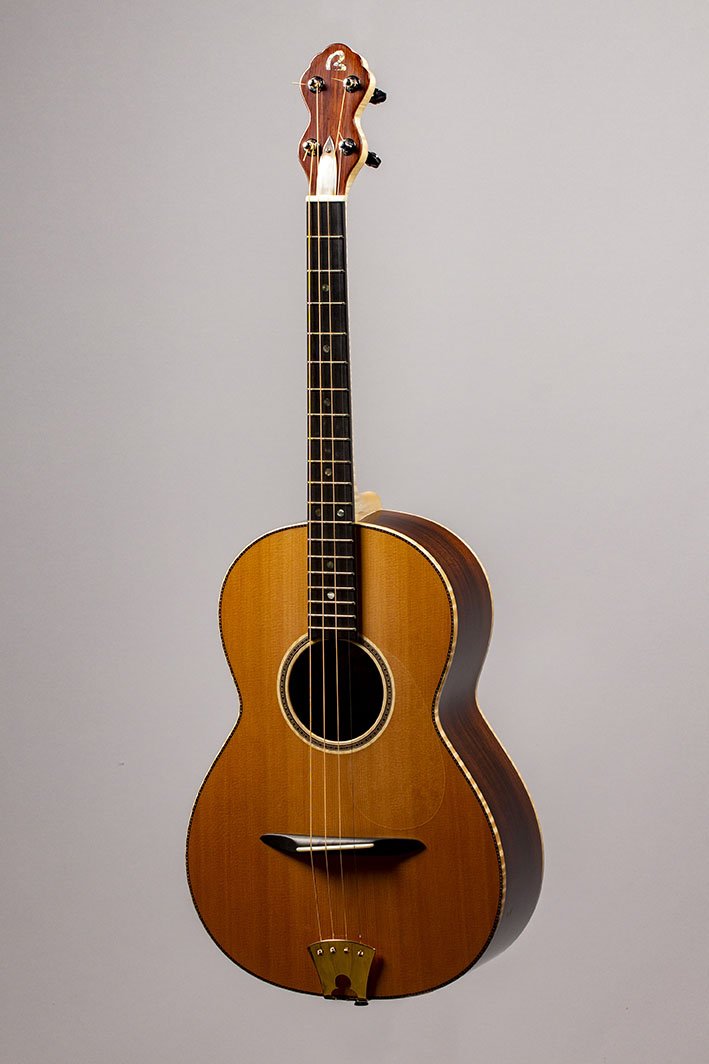
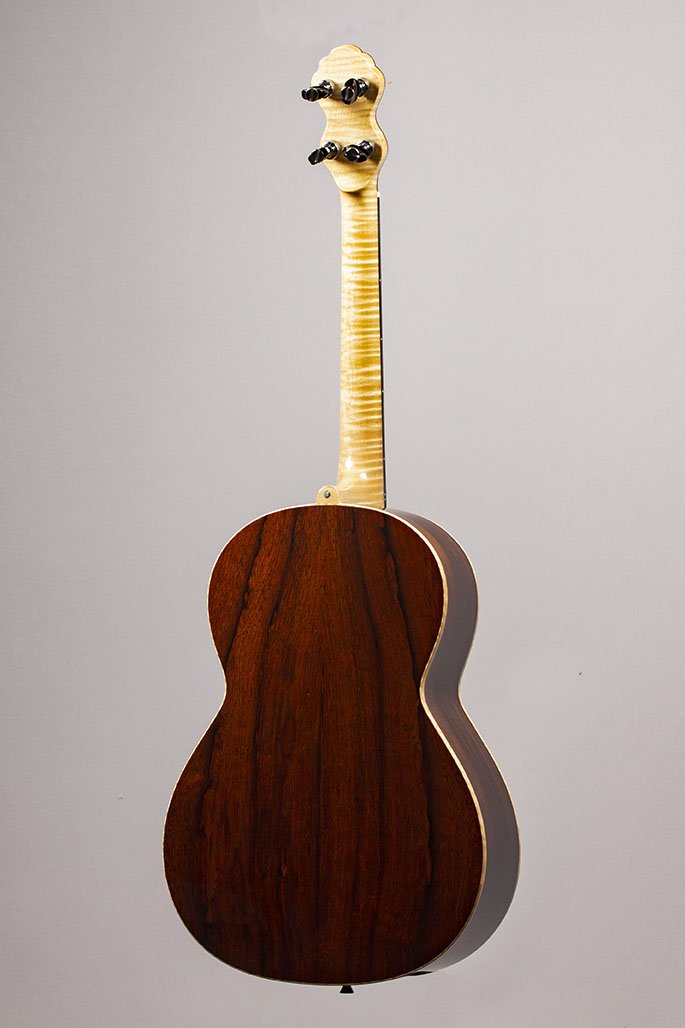
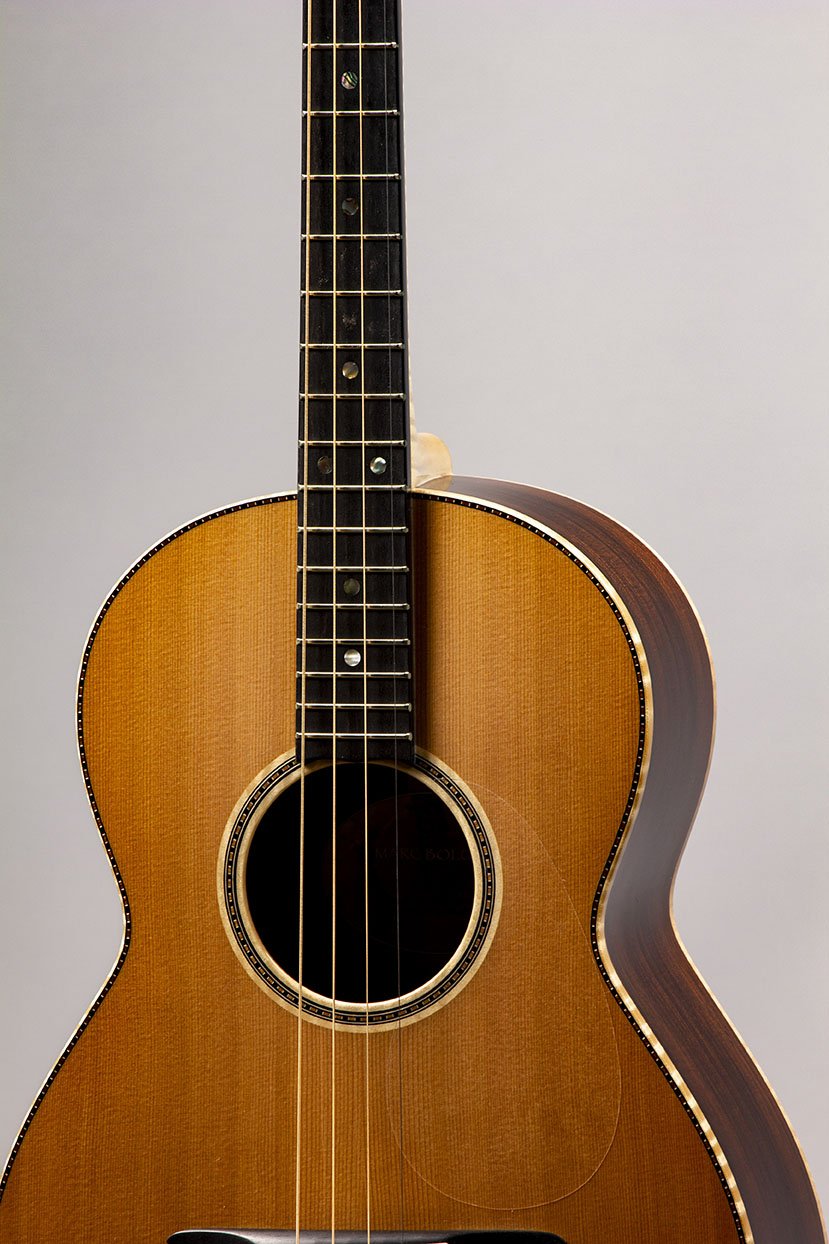
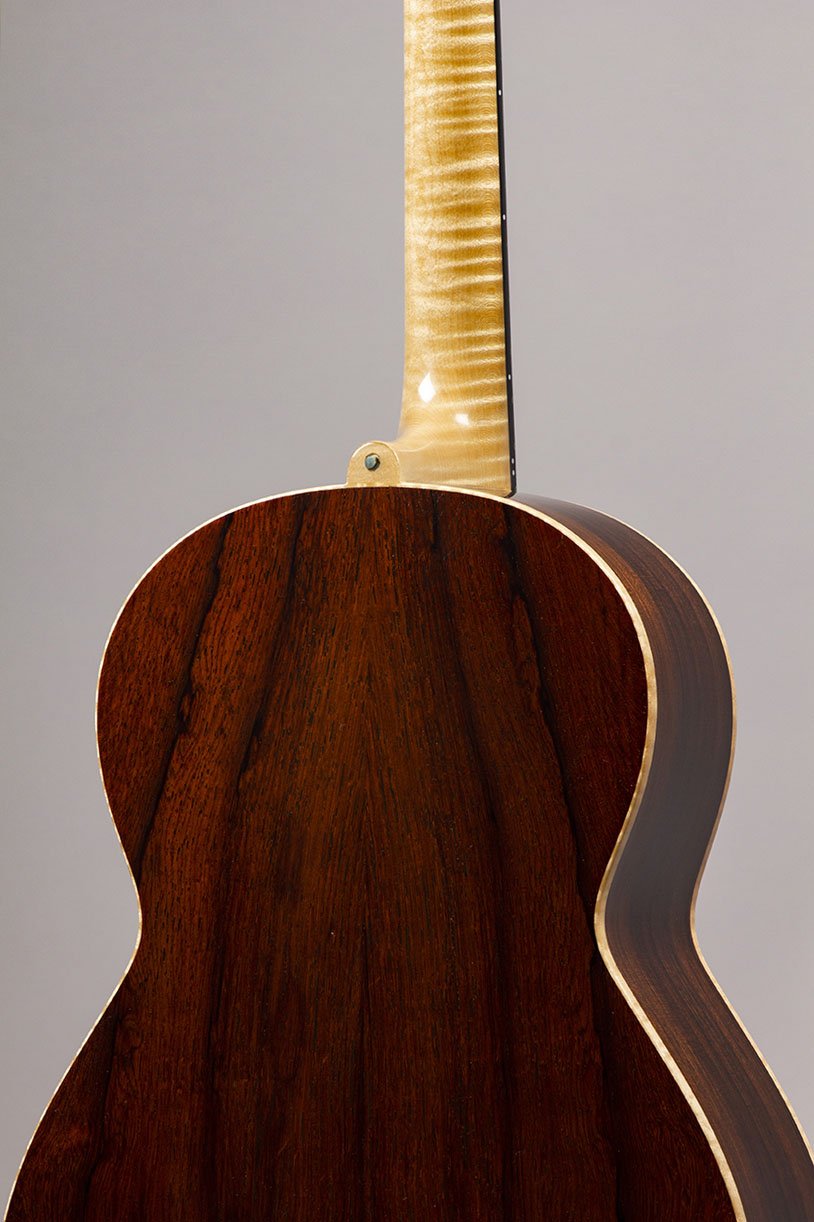
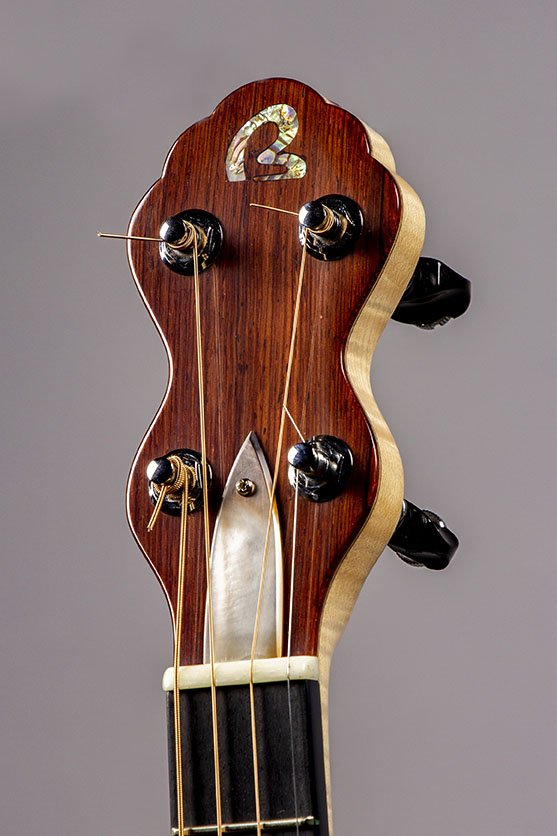
The tenor guitar is a plucked string instrument that appeared in the 1920s, originally designed to allow banjo players to easily transition to guitar without relearning finger placements.
Physical Characteristics
Number of Strings: 4 strings (made of metal).
Neck: Significantly narrower than a standard 6-string guitar neck.
Scale Length: Shorter than a classical guitar, typically between 53 cm and 58 cm (21 to 23 inches).
Resonance Body: Often more compact (parlor or O-type), available in acoustic, electro-acoustic, or solid body electric versions.
Main Tunings
Its versatility stems from its multiple tuning possibilities:
| Tuning | Notes (from low to high) | Use / Style |
| Fifths (Standard) | C – G – D – A (C – G – D – A) | Historical tuning for the tenor banjo and alto. |
| Irish | G – D – A – E (G – D – A – E) | One octave below the mandolin, highly favored in folk music. |
| Chicago / Gypsy | D – G – B – E (D – G – B – E) | Identical to the 4 highest strings of a standard guitar. |
| Open G / Barchan | D – G – B – D (D – G – B – D) | Ideal for playing in slide or open chords. |
Its tone is bright, dry, and very clear, allowing it to stand out easily among other acoustic instruments.